Saving one life in Islam is regarded as an act so profound that it carries the weight of saving all of humanity. Islam places immense value on the sanctity of human life, treating its preservation not as a secondary virtue, but as a core moral responsibility entrusted to every individual.
This principle is not symbolic or abstract. It is a foundational teaching rooted in the Qur’an, reinforced by Prophetic guidance, and reflected in Islamic law and ethics. At its heart, Islam teaches that protecting life is among the highest forms of worship and moral action.

Saving One Life in Islam in the Qur’an (Surah Al-Ma’idah 5:32)
The clearest expression of this value appears in the Qur’an:
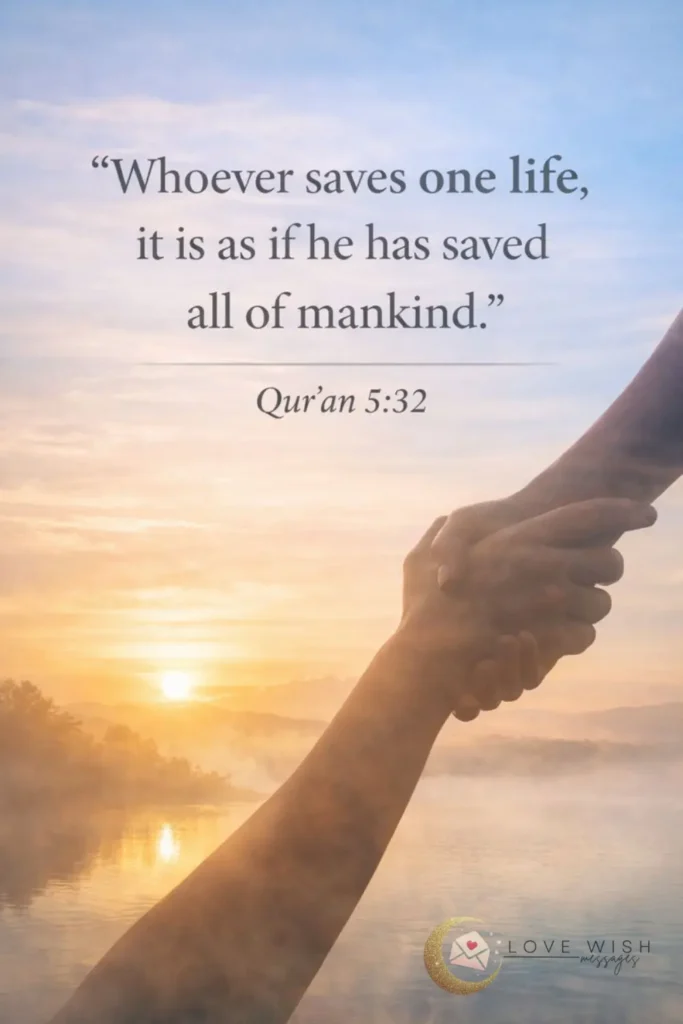
“Whoever kills a soul unless for a soul or for corruption done in the land, it is as if he had slain all of mankind. And whoever saves one life, it is as if he had saved all of mankind.”
(Qur’an 5:32)
This verse was revealed following the story of Cain and Abel, the first recorded act of unjust killing. By referencing this event, the Qur’an establishes a timeless moral lesson. Violence against an innocent soul is not a private crime. It is a crime against humanity itself.
In the same way, saving one life in Islam is elevated beyond a personal good deed. It becomes an act with universal moral weight, regardless of who the person is or where the act takes place.
What Classical Tafsir Teaches About Saving Life
Classical Qur’anic scholars gave special attention to this verse. Tafsir works such as those attributed to Ibn Kathir explain that Surah Al-Ma’idah 5:32 establishes two essential principles.
First, unjust killing is among the gravest sins in Islam. Second, preserving life is one of the greatest acts of righteousness, even if only a single life is saved.
The Qur’an uses the word nafs, meaning a soul. It does not specify religion, ethnicity, or social status. This universality removes any justification for selective compassion and affirms that every human life carries inherent dignity.
This teaching forms the foundation of the broader Islamic teaching on saving life, where mercy and restraint are central moral obligations.
For those who wish to deepen their understanding of Islamic teachings and the Qur’an, learning Arabic with a qualified teacher can be a meaningful step. Many learners choose platforms like Preply to connect with experienced Arabic tutors at their own pace.

The Sanctity of Human Life Throughout the Qur’an
Surah Al-Ma’idah 5:32 is not an isolated command. The Qur’an repeatedly emphasizes the sacredness of life.
Allah says:
“Do not take a life which Allah has made sacred, except with justice.”
(Surah Al-Isra 17:33)
And again:
“Do not kill the soul which Allah has forbidden, except by right.”
(Surah Al-An‘am 6:151)
Together, these verses establish a clear boundary. Life is sacred by default, and violating it requires the highest ethical and legal justification. Fear, anger, or ideology are never sufficient reasons.
This reinforces the sanctity of human life in Islam as a universal principle rather than a situational rule.
Prophetic Teachings: Safety as a Measure of Faith
The Prophet Muhammad, peace be upon him, connected faith directly to how safe others feel around a person. He said:
“A Muslim is the one from whose tongue and hands people are safe.”
This teaching shifts the focus of religiosity away from claims and appearances and toward real impact. Faith is not measured only by rituals, but by whether others are protected from harm.
The Prophet also warned that cases involving unjust bloodshed would be among the first matters judged on the Day of Resurrection. This highlights how seriously Islam treats the taking of life.
Preservation of Life as the Highest Objective of Sharia
Islamic scholars later articulated the higher objectives of Sharia, known as maqasid al-Sharia. These include the preservation of religion, life, intellect, lineage, and property.
Significantly, the preservation of life comes first.
This priority shows that protecting human life is central to Islamic law. From this principle flow responsibilities such as providing food and water, offering medical care, preventing harm, and rescuing those in danger.
These responsibilities reflect the broader Islamic teaching on saving life, where human dignity is placed above material or political interests.
Modern Applications of Preserving Life in Islam
In today’s world, preserving life appears in many forms.
- A doctor treating patients without discrimination.
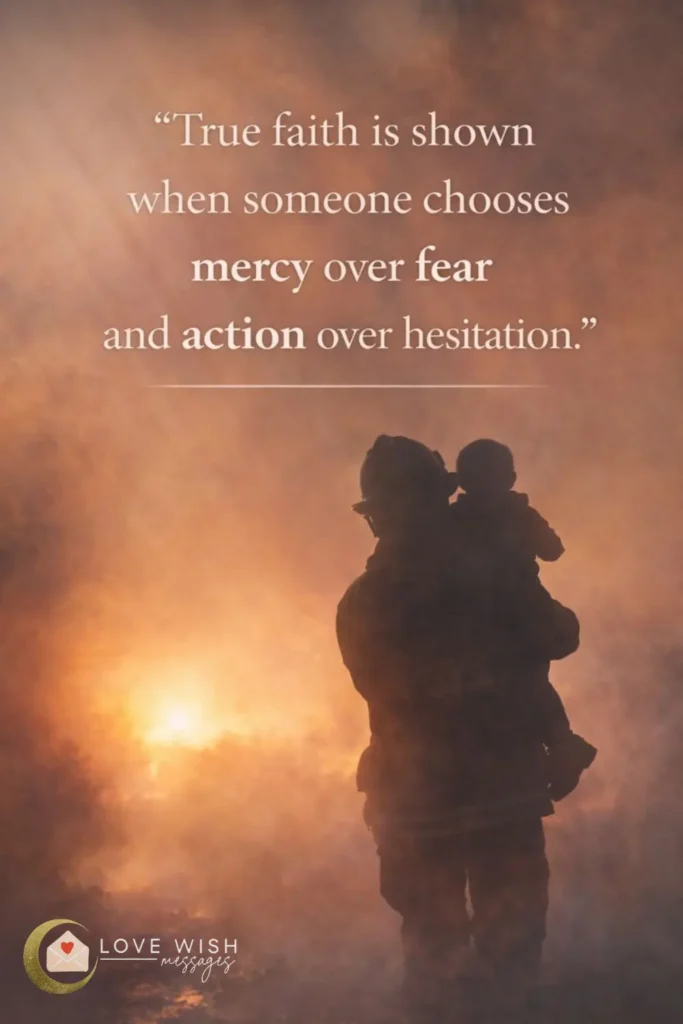
- A firefighter entering danger to rescue others.
- A neighbor helping someone escape harm.
- A volunteer providing food or shelter.
- A bystander intervening to prevent violence.
Each of these actions reflects the sanctity of human life in Islam and shows how Qur’anic teachings continue to guide real decisions in real situations.
When Qur’anic Values Appear in Real Life
From time to time, the world witnesses moments when ordinary people act with extraordinary courage. These moments remind us that Islamic teachings are not theoretical ideas reserved for books or sermons.
They are lived values.
Stories of courage and selflessness remind us why saving one life in Islam carries such deep moral and spiritual meaning, turning compassion into a living expression of faith.
Mercy Beyond Humanity
Islamic teachings on preserving life extend beyond human beings. The Prophet Muhammad spoke of a man forgiven by Allah for giving water to a thirsty dog and warned of punishment for cruelty to animals.
This shows that preserving life in Islam is not limited to humans alone. Compassion toward all living beings is a sign of moral integrity and sincere faith.
A Final Reflection
Islam does not define greatness by power or dominance, but by responsibility. It teaches that the true value of a person is revealed in how they protect life when it is vulnerable.
Saving one life may happen in a dramatic moment of danger or through quiet, consistent care. In both cases, it carries immense spiritual weight.
This enduring message explains why saving one life in Islam is considered among the greatest acts of faith. Life is sacred. Mercy is required. Responsibility is shared.
Frequently Asked Questions About Saving One Life in Islam
What does Islam say about saving one life?
Islam teaches that saving one life is equal to saving all of humanity. This principle comes directly from the Qur’an in Surah Al-Ma’idah (5:32), which emphasizes the immense value and sanctity of every human soul. Saving one life in Islam is considered a sacred moral responsibility and one of the highest acts of righteousness.
Which Qur’an verse talks about saving one life?
The primary verse is Surah Al-Ma’idah (5:32). It states that killing one innocent soul is like killing all of mankind, while saving one life is like saving all of humanity. This verse was revealed after the story of Cain and Abel and is explained in classical tafsir works such as Ibn Kathir.
Is saving one life in Islam limited to Muslims only?
No. The Qur’an uses the word nafs, meaning a soul, without limiting it to any religion, ethnicity, or group. This shows that saving one life in Islam applies universally and reflects the broader Islamic teaching on mercy and human dignity.
Why is preserving life so important in Islam?
Preserving life is the highest objective of Sharia, known as maqasid al-Sharia. It comes before the preservation of religion, intellect, family, and property. This shows that protecting life is central to Islamic law and ethics, not secondary.
How does the Prophet Muhammad emphasize the sanctity of life?
The Prophet Muhammad, peace be upon him, taught that a true Muslim is one from whose hands and tongue others are safe. He also warned that unjust bloodshed would be among the first matters judged on the Day of Resurrection, highlighting how seriously Islam treats harm to life.
Does Islam teach mercy toward animals as well?
Yes. Islamic teachings extend mercy to all living beings. The Prophet Muhammad spoke of forgiveness granted to a person who gave water to a thirsty dog and warned against cruelty to animals. This shows that preserving life in Islam includes compassion beyond humanity.